Are you one of us?
Many people assume they would never qualify for a service dog, but that is not always the case. A wide range of physical, medical, and emotional conditions may qualify under the law. Below are some common examples. If any of these conditions apply to you, you may proceed.


Do You Qualify?
Here are some common examples of disabilities and conditions where a person may legitimately use a service dog. Under the ADA and many state laws, a service dog must be individually trained to perform specific work or tasks directly related to the person’s disability.
Physical Disabilities
Mobility Impairments
A service dog may help someone who has difficulty walking, balancing, or moving.
Examples:
Wheelchair users
Multiple sclerosis (MS)
Cerebral palsy
Muscular dystrophy
Arthritis
Paralysis
Amputations
Spinal cord injuries
Tasks may include:
Retrieving dropped items
Opening doors
Pulling a wheelchair
Assisting with balance
Helping the handler stand or transfer
Blindness or Low Vision
Guide dogs assist people who are blind or visually impaired.
Tasks may include:
Navigating obstacles
Stopping at curbs and stairs
Finding doors or exits
Leading safely through crowds
Deafness or Hearing Loss
Hearing dogs alert handlers to important sounds.
Examples:
Doorbells
Fire alarms
Crying babies
Someone calling the person’s name
Medical Conditions
Diabetes
Diabetic alert dogs can detect blood sugar changes.
Tasks may include:
Alerting to low or high blood sugar
Retrieving glucose supplies
Getting help during emergencies
Seizure Disorders / Epilepsy
Seizure response dogs assist during or after seizures.
Tasks may include:
Alerting before a seizure (for some handlers)
Protecting the person during a seizure
Fetching medication
Activating emergency systems
Getting assistance from others
Cardiac Conditions
People with heart conditions may use service dogs.
Examples:
POTS (Postural Orthostatic Tachycardia Syndrome)
Heart arrhythmias
Syncope/fainting disorders
Tasks may include:
Alerting before fainting episodes
Assisting with stability
Retrieving medication
Seeking help
Severe Allergies
Some service dogs are trained to detect allergens.
Examples:
Peanut allergies
Gluten allergies
Tasks may include:
Detecting allergens in food or environments
Alerting the handler before exposure
Psychiatric Disabilities
Psychiatric service dogs are different from emotional support animals (ESAs). They must be trained to perform specific tasks related to a psychiatric disability.
Post-Traumatic Stress Disorder (PTSD)
Tasks may include:
Waking from nightmares
Interrupting panic attacks
Creating personal space in crowds
Guiding the handler to exits
Medication reminders
Common among:
Veterans
First responders
Assault survivors
Trauma survivors
Anxiety Disorders
A psychiatric service dog may help with severe, disabling anxiety.
Tasks may include:
Interrupting panic attacks
Deep pressure therapy
Grounding during dissociation
Guiding the person to safety
Autism Spectrum Disorder
Service dogs may assist autistic individuals.
Tasks may include:
Preventing wandering/elopement
Interrupting self-harming behaviors
Providing grounding and sensory regulation
Assisting with transitions and routines
Depression or Bipolar Disorder
If disabling, a service dog may assist with:
Medication reminders
Interrupting harmful behaviors
Encouraging daily functioning
Alerting to psychiatric episodes
Other Disabilities
Traumatic Brain Injury (TBI)
Tasks may include:
Memory reminders
Orientation assistance
Balance support
Finding help during confusion episodes
Examples:
Ehlers-Danlos syndrome (EDS)
Chronic fatigue syndrome
Fibromyalgia
Tasks may include:
Mobility support
Retrieving items
Alerting to medical episodes
Assistance during fatigue flare-ups
Important Legal Note
A person does not need to:
Use a wheelchair
“Look disabled”
Have visible impairments
to legally use a service dog.
Under the ADA, a disability can be:
Physical
Sensory
Psychiatric
Intellectual
Neurological
Invisible/non-apparent
The key legal requirement is:
The person has a disability, and
The dog is specifically trained to perform tasks related to that disability.
Examples of Tasks That Qualify
Examples of trained service dog tasks include:
Guiding
Alerting to sounds
Retrieving items
Medical alerts
Interrupting panic attacks
Deep pressure therapy
Mobility assistance
Medication reminders
Seizure response
Allergen detection
Examples That Generally Do NOT Qualify Alone
Comfort alone is not enough for a service dog under the ADA.
Examples that generally do not qualify by themselves:
Providing companionship only
Emotional support without trained tasks
Making someone feel calmer merely by presence
Those animals may qualify instead as:
Emotional support animals (ESAs)
Therapy animals
which have different legal protections than service dogs.
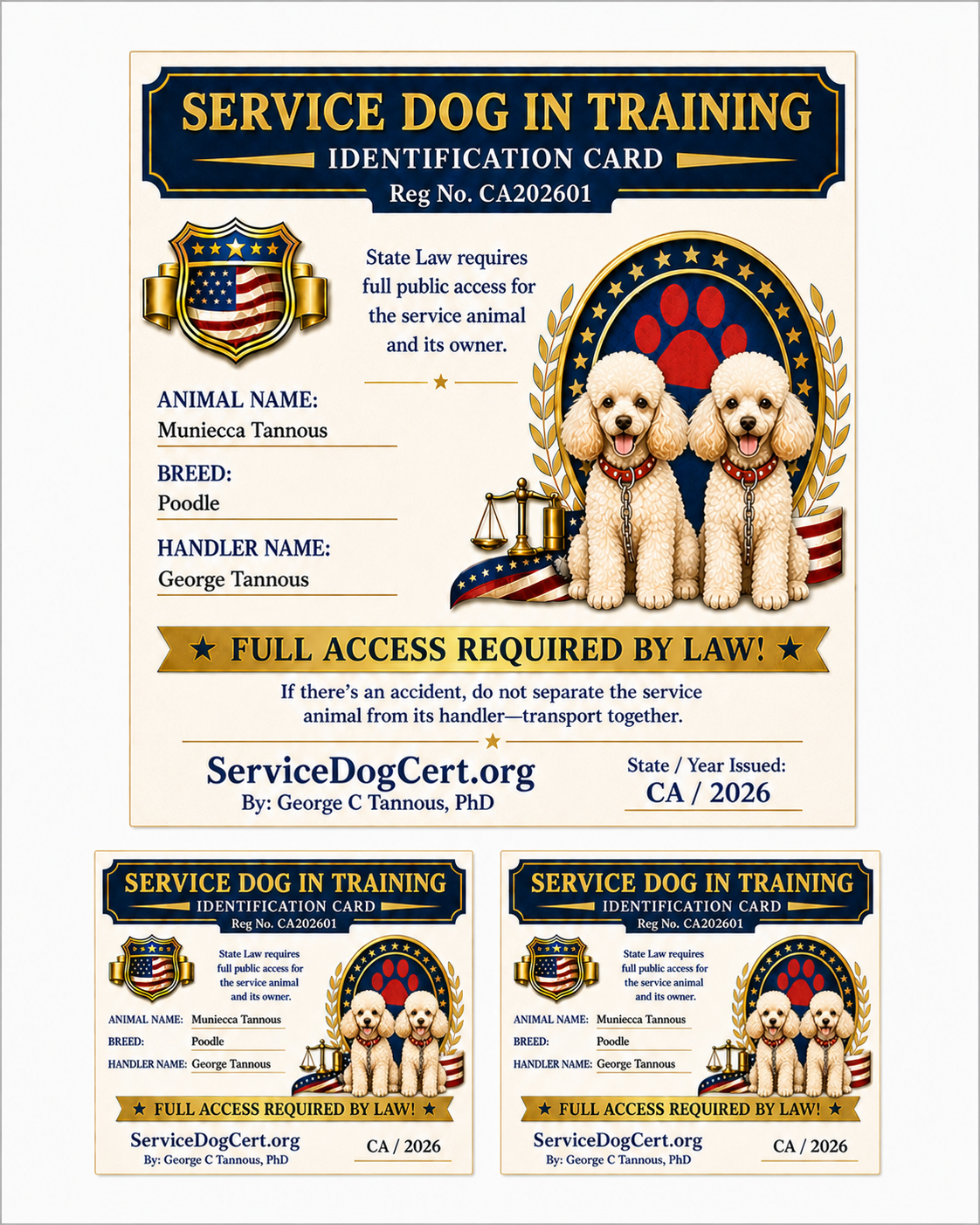
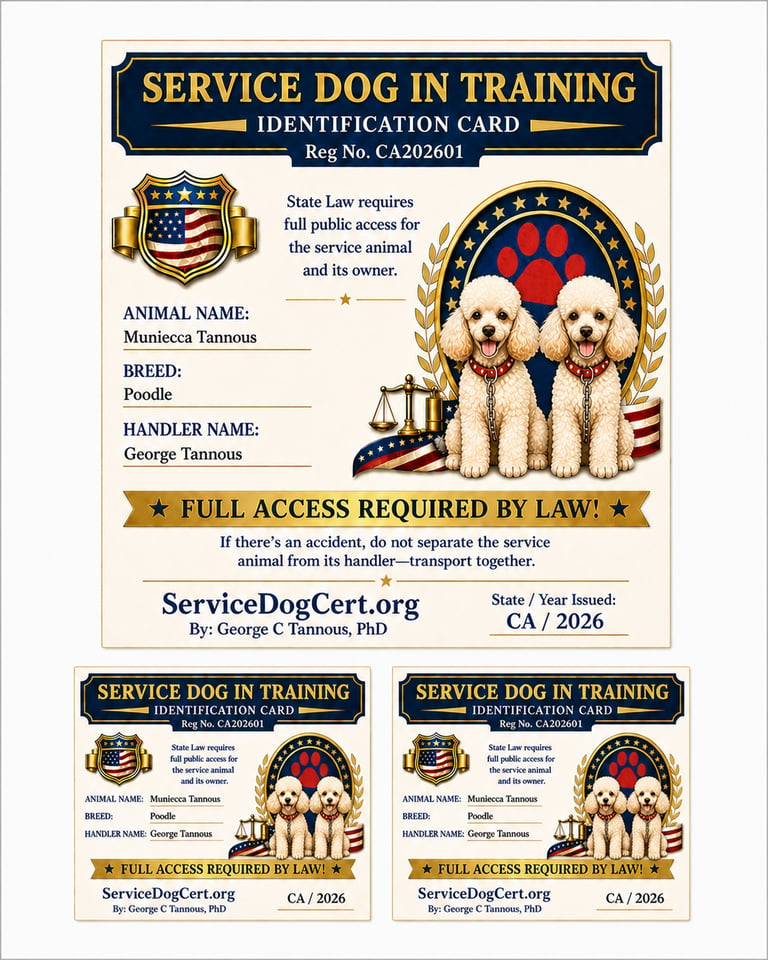
Get Yours Today!
$9.95 Prepared & Emailed You Print
$19.95 Prepared, Printed, and Mailed
Get in touch
Contacts
818.512.8125
george@gtannous.org