Service Dogs in Training Laws in North Dakota
Overview
North Dakota law provides public access protections for service dogs in training (SDITs), allowing trainers and individuals with disabilities to bring dogs in training into many public places.
Unlike federal law under the Americans with Disabilities Act (ADA), which does not specifically grant public access rights to service animals in training, North Dakota law expressly recognizes service animals in training under state statute.
Legal Foundation
North Dakota’s service animal and SDIT laws are primarily found in:
North Dakota Century Code (NDCC) § 25-13-02.1
NDCC § 25-13-02.2
NDCC § 25-13-03
NDCC § 25-13-04
NDCC § 12.1-21.1-03
These laws protect individuals with disabilities and service animal trainers from discrimination in public accommodations and other covered settings.
Service Dogs in Training Under North Dakota Law
North Dakota law specifically recognizes:
Service animals, and
Service animals in training
under state disability-access laws.
Under NDCC § 25-13-02.1:
“Service animal in training” means an animal undergoing training to become a service animal.
North Dakota allows:
Individuals with disabilities training their own dog
Professional service dog trainers
Persons legitimately engaged in service animal training
to bring SDITs into public places for training purposes.
Public Access Rights
Service dogs in training may generally accompany handlers and trainers into places open to the public, including:
Restaurants and food establishments
Retail stores and shopping centers
Hotels and lodging
Public transportation
Government buildings
Hospitals and medical offices
Educational institutions
Most places open to the general public
North Dakota law grants SDITs substantially similar public access rights as fully trained service animals.
Additionally:
Businesses may not charge extra fees or deposits because of a service dog or service dog in training.
SDITs generally must be permitted anywhere members of the public are allowed to go.
Requirements for Service Dogs in Training
North Dakota generally requires service dogs in training to be:
Under the handler’s control
Properly behaved in public
Housebroken
Non-disruptive and safe
Service animals and SDITs are generally expected to be:
Harnessed, leashed, or tethered unless doing so interferes with the dog’s work or training.
North Dakota does not generally require:
State certification
Registration
Identification cards
Special vests or patches
Businesses generally may not require proof of certification or documentation.
Who Can Train a Service Dog
North Dakota law protects:
Individuals with disabilities training their own dog
Professional service dog trainers
Persons engaged in legitimate service animal training activities
The statutes do not impose universal statewide licensing or certification requirements for service dog trainers.
Handler Responsibilities
The handler or trainer is responsible for:
Maintaining control of the dog
Preventing disruptive or dangerous behavior
Ensuring the dog is housebroken
Paying for damage caused by the dog
A business may require removal of the dog if:
The dog is out of control and the handler fails to take corrective action
The dog poses a direct threat to health or safety
The dog is not housebroken
Even if a dog is removed, the business generally must still provide the individual an opportunity to obtain goods or services without the animal present.
What Businesses Can and Cannot Do
Businesses MAY:
Ask whether the dog is a service animal required because of a disability
Ask what work or task the dog has been trained — or is being trained — to perform
Businesses MAY NOT:
Require certification or registration
Demand proof of disability
Require the dog to demonstrate tasks
Charge additional fees or deposits
Deny access solely because the dog is still in training under North Dakota law
Misrepresentation and Interference
North Dakota law prohibits:
Fraudulently misrepresenting a pet as a service animal
Interfering with, injuring, or denying access rights involving service animals or SDITs
Under NDCC § 12.1-21.1-03:
Injuring or interfering with a service animal may result in criminal penalties, restitution, and civil liability.
Violations may result in:
Criminal penalties
Civil damages
Fines and restitution in some circumstances
North Dakota law also protects handlers and trainers from intentional harassment or obstruction involving service animals.
Federal vs. North Dakota Law
ADA (federal law):
Does not specifically grant public access rights to service dogs in training
North Dakota law:
Expressly recognizes service animals in training and grants public access protections under state statute
Because North Dakota law provides broader protections in this area, those state protections generally apply within North Dakota.
Summary
North Dakota allows service dogs in training in many public places
Trainers and individuals with disabilities are both protected
SDITs must remain under control and behave appropriately
North Dakota generally does not require certification or identification for SDITs
Businesses cannot charge extra fees or deny access solely because a dog is in training
Fraudulent representation and interference may result in civil or criminal penalties
Sources
North Dakota Century Code Chapter 25-13:
https://www.ndlegis.gov
North Dakota Century Code § 12.1-21.1-03:
https://www.ndlegis.gov
North Dakota Legislative Branch:
https://www.ndlegis.gov
North Dakota Department of Labor and Human Rights:
https://www.nd.gov/labor
Animal Legal & Historical Center – North Dakota Assistance Animal Laws:
https://www.animallaw.info
Disclaimer
This content is provided for informational and educational purposes only and does not constitute legal advice. Laws and regulations may change, and their application can vary depending on specific circumstances. For the most current and accurate information, consult official North Dakota statutes or a qualified attorney.
Service Dogs in Training Laws in the State of North Dakota are Recognized!
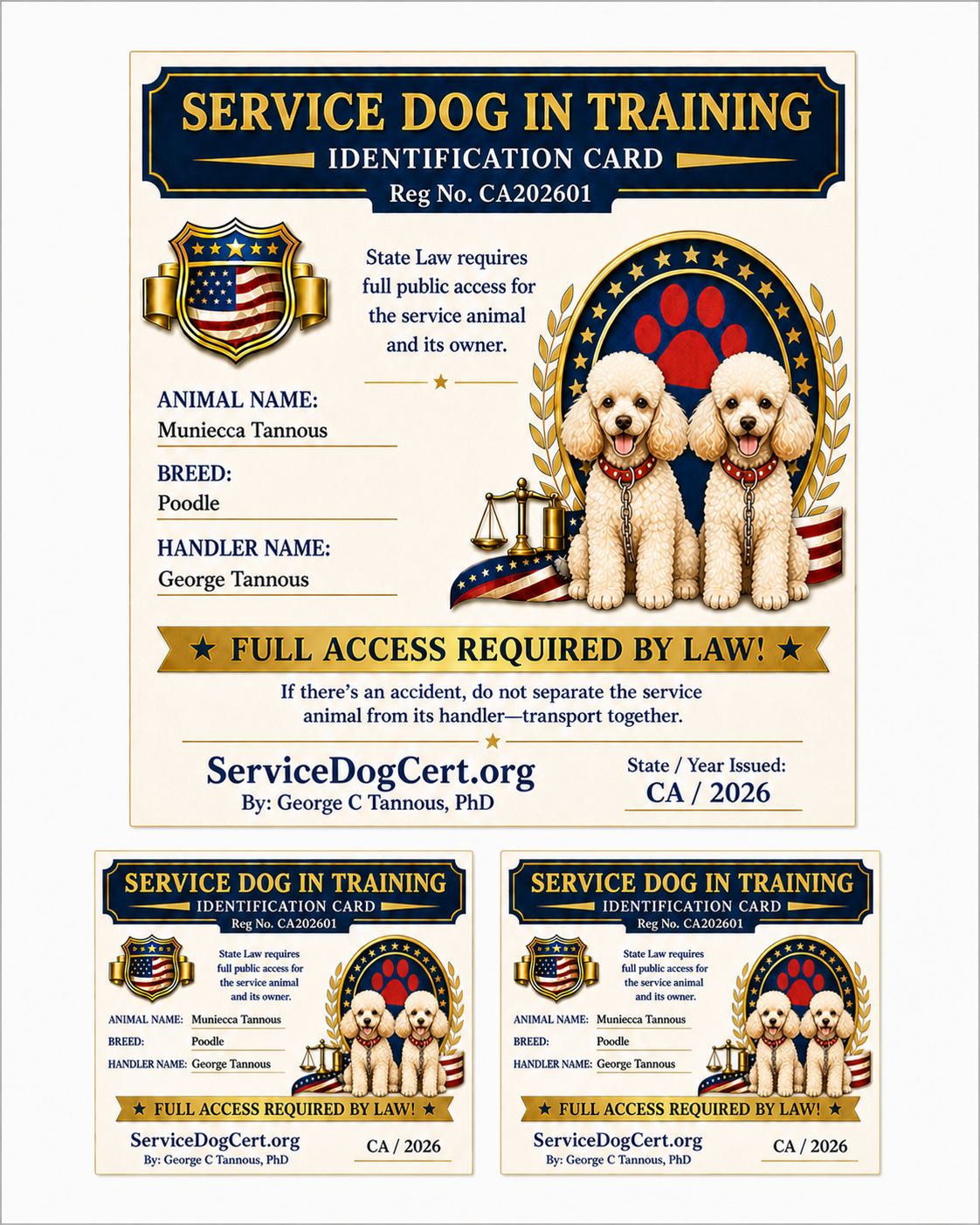
Immediate Gratification
$9.95 Prepared & Emailed You Print
$19.95 Prepared, Printed, and Mailed
Get in touch
Contacts
818.512.8125
george@gtannous.org